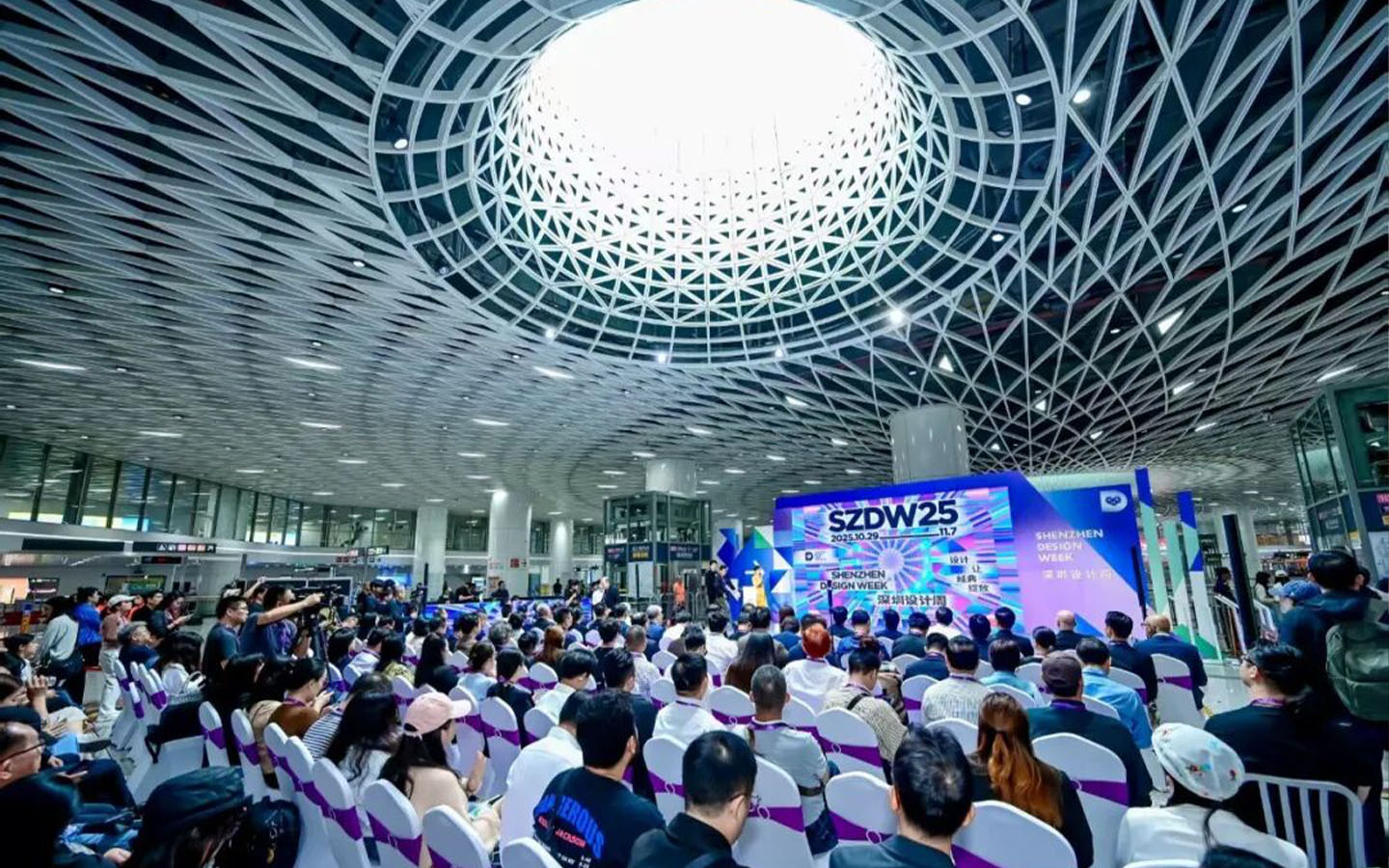
The 2026 Shenzhen Design Week will take place between 27 April and 6 May at the Longgang International Arts Centre, according to Chinese media reports.
The 10-day event will feature a host of activities, including the marquee 2026 Kunpeng Global Design Awards, which have gathered close to 6,300 submissions from 20 countries and territories. There will also be exhibitions, talks and conferences.
A major highlight is the launch of the APEC China Year Shenzhen – City of Design initiative, which will see participation from multiple metropolises that have been dubbed a City of Design.
Confirmed attendees will include representatives from the United States, Canada, Singapore, South Korea, Indonesia, Thailand and the Philippines, alongside industry experts and representatives from domestic City of Design cities including Beijing, Shanghai, Wuhan and Chongqing. Experts and scholars from domestic design academies will also attend.
[See more: This week in the Greater Bay Area: Where to see Monet paintings, a robotics exhibition and more]
Shenzhen Design Week will meanwhile sign a strategic cooperation agreement with the London Design Festival to support the global expansion of the Shenzhen Design brand.
The week’s programme also includes a Global City of Design Roundtable Dialogue and Global Designers Conference and five industry matchmaking conferences.
Exhibitions and installations include the Design ABC Plan’s themed container art spaces, and the Shenzhen-Hong Kong-Macao Digital Design Tri-city Exhibition, both of which are at the Longgang International Arts Centre. The Shenzhen A+ Cultural and Creative Product Design Competition will also take place.
PakarPBN
A Private Blog Network (PBN) is a collection of websites that are controlled by a single individual or organization and used primarily to build backlinks to a “money site” in order to influence its ranking in search engines such as Google. The core idea behind a PBN is based on the importance of backlinks in Google’s ranking algorithm. Since Google views backlinks as signals of authority and trust, some website owners attempt to artificially create these signals through a controlled network of sites. In a typical PBN setup, the owner acquires expired or aged domains that already have existing authority, backlinks, and history. These domains are rebuilt with new content and hosted separately, often using different IP addresses, hosting providers, themes, and ownership details to make them appear unrelated. Within the content published on these sites, links are strategically placed that point to the main website the owner wants to rank higher. By doing this, the owner attempts to pass link equity (also known as “link juice”) from the PBN sites to the target website. The purpose of a PBN is to give the impression that the target website is naturally earning links from multiple independent sources. If done effectively, this can temporarily improve keyword rankings, increase organic visibility, and drive more traffic from search results.
Jasa Backlink
Download Anime Batch